

A damaged sewer line is one of those plumbing problems that most homeowners never think about until something goes wrong. Slow drains, foul odors, soggy spots in the yard, and recurring backups can quickly turn into expensive headaches if the problem is not addressed.
When sewer line issues arise, many homeowners assume that repairing the pipe will require digging up their entire yard. While that was often the case in the past, modern plumbing technology now offers a less invasive solution. Trenchless sewer line repair allows many sewer problems to be fixed with minimal digging, helping homeowners avoid major disruption to their property.
In this guide, we will explain the differences between trenchless sewer line repair and traditional sewer repair, including how each method works, their benefits, potential drawbacks, and how to determine which option is best for your home.
So, without further delay, let’s get started.
Table of Contents
What Is Trenchless Sewer Line Repair?
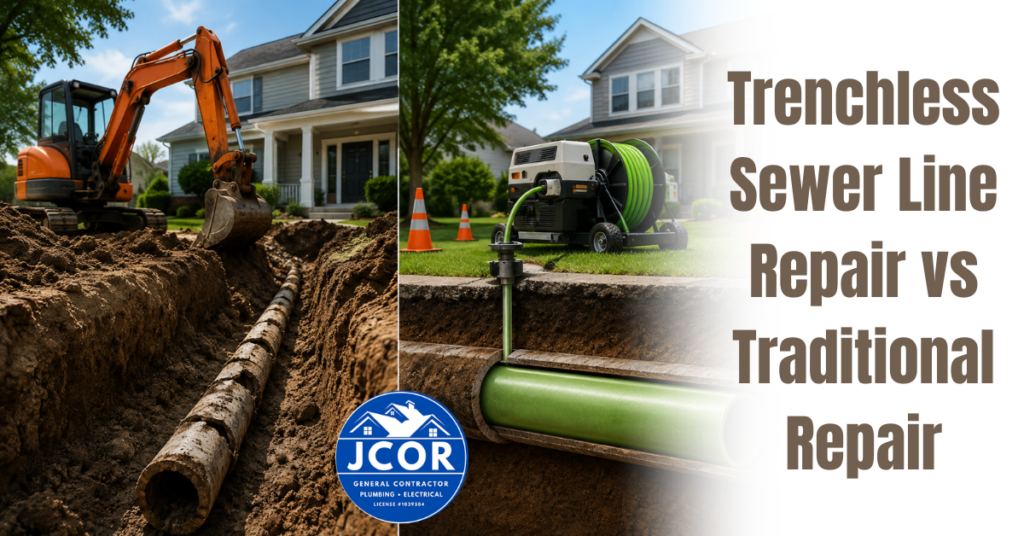
Many homeowners hear the term trenchless repair but are not exactly sure what it means. Simply put, trenchless sewer repair is a modern method of repairing or replacing underground sewer pipes without digging a large trench across your property.
Instead of excavating your yard from one end of the sewer line to the other, plumbers access the damaged pipe through small entry points. Specialized equipment is then used to repair or replace the pipe underground.
This approach has become increasingly popular because it can save homeowners time, reduce property damage, and minimize restoration costs after the repair is complete.
For homeowners who have invested in landscaping, patios, driveways, or other outdoor features, trenchless repair can be an attractive alternative to traditional excavation.
What Is Traditional Sewer Line Repair?
Traditional sewer repair has been used for decades and is still necessary in certain situations. This method involves digging directly above the damaged sewer line so technicians can access the pipe and performs pipe repair.
While traditional repair can be highly effective, it often requires significant excavation. Depending on the location of the pipe, this may involve removing sections of grass, landscaping, sidewalks, or driveways.
At JCor Plumbing and Contractor, our team evaluates every sewer problem carefully before recommending a repair method. In some cases, traditional repair is the best solution. In others, trenchless technology may provide a faster and less disruptive alternative.
How Does Trenchless Sewer Line Repair Work?
Before deciding whether trenchless repair is right for your home, it helps to understand how the process works. The exact method used will depend on the condition of your sewer line, the type of damage present, and the overall layout of your property.
Pipe Lining
Pipe lining is one of the most common trenchless repair methods. During this process, a flexible liner coated with a special resin is inserted into the existing sewer pipe. Once the liner is positioned correctly, it is inflated and allowed to cure.
As the resin hardens, it creates a new pipe inside the old pipe. This restores the integrity of the sewer line while avoiding extensive excavation. Pipe lining is often an excellent option for pipes with cracks, minor corrosion, or small leaks.
Pipe Bursting
When a sewer line is too damaged to be repaired with a liner, pipe bursting may be recommended. This method involves pulling a new pipe through the existing line while simultaneously breaking apart the old pipe underground.
Because the replacement occurs below the surface, homeowners can often avoid the extensive digging associated with traditional sewer replacement. Many property owners choose this type of trenchless sewer repair because it provides a completely new sewer line with minimal disruption to the property.
Sewer Camera Inspections
Before any repair work begins, a professional sewer camera inspection is typically performed. This allows plumbers to see exactly what is happening inside the pipe and identify the root cause of the problem.
Camera inspections can reveal tree root intrusion, corrosion, blockages, cracks, and other hidden plumbing problems that may not be visible from the surface. Accurate diagnostics help ensure the right repair solution is selected from the beginning.
What Are the Benefits of Trenchless Sewer Line Repair?
Many homeowners choose trenchless repair because it offers several advantages over traditional excavation. While every situation is different, trenchless technology can often provide a faster and less disruptive solution for repairing damaged sewer lines.
If preserving your property is important, trenchless methods may be worth considering when evaluating your repair options.
Less Damage to Your Property
One of the biggest reasons homeowners choose trenchless repair is the ability to avoid extensive digging. Traditional repairs often require large sections of the yard to be excavated, which can damage landscaping, driveways, patios, and walkways.
With trenchless repair, only small access points are usually needed. This helps preserve your property’s appearance while reducing the amount of cleanup required after the project is complete.
Faster Project Completion
Most homeowners want plumbing problems resolved as quickly as possible. In many cases, trenchless repairs can be completed faster than traditional excavation projects.
Since less digging is required, the repair process is often more efficient. This means less disruption to your daily routine and a quicker return to normal use of your plumbing system.
Long Lasting Results
Modern trenchless materials are designed to withstand corrosion, root intrusion, and everyday wear. When installed properly, many trenchless sewer systems can provide reliable performance for decades.
Investing in a durable repair solution can help reduce the likelihood of future sewer problems and provide long term peace of mind.
Lower Restoration Costs
The cost of repairing a sewer line is only part of the equation. After traditional excavation, homeowners may also need to pay for landscaping repairs, concrete replacement, or other restoration work.
Because trenchless methods minimize surface disruption, restoration costs are often significantly lower. This can make trenchless repair a cost effective option even when the initial repair investment is similar.
When Is Traditional Sewer Repair a Better Option?
Although trenchless repair offers many advantages, it is not always the right solution. Certain situations may require traditional excavation to fully address the problem.
At JCor Plumbing and Contractor, our goal is to recommend the option that provides the best long term results for your home rather than simply choosing the newest technology.
Severe Pipe Damage
If a sewer pipe has completely collapsed or suffered extensive structural damage, traditional excavation may be necessary. In these cases, technicians need direct access to the damaged section to perform a proper replacement.
A thorough inspection helps determine whether trenchless repair is possible or if excavation is the safer choice.
Easier Access for Complex Repairs
Some sewer systems have multiple issues occurring at different locations along the line. Traditional repair allows technicians to fully expose the pipe and address all problem areas directly.
This approach can be beneficial when repairs involve more than just a single damaged section.
Certain Property Conditions
Every property is different. Soil conditions, pipe location, accessibility, and existing infrastructure can all influence which repair method is most appropriate.
An experienced provider of plumbing services can evaluate these factors and recommend the most effective solution for your specific situation.
How Much Does Sewer Line Repair Cost?
One of the most common questions homeowners ask is how much it will cost to repair a damaged sewer line. The answer depends on several factors, including the location of the damage, the length of the affected pipe, and whether trenchless or traditional repair methods are used.
In some cases, a sewer issue may be caught early during a routine inspection. However, waiting too long can turn a minor problem into a major repair. If you think you may need sewer repair, scheduling a professional inspection is the best way to understand the condition of your system and avoid unexpected expenses.
At JCor Plumbing and Contractor, we always recommend getting a professional evaluation before making any repair decisions. This allows homeowners to compare options and request an estimate based on their specific situation.
What Are the Signs You Need Sewer Line Repair?
Sewer line damage does not always create obvious symptoms right away. In many cases, homeowners notice small warning signs before a major problem develops.
Knowing what to watch for can help you address issues early and prevent costly damage to your property.
Multiple Slow Drains
When several drains throughout your home begin draining slowly at the same time, there may be a blockage somewhere within the main sewer line.
While some homeowners try basic drain unclogging tips, recurring slow drains often indicate a larger issue that requires professional attention. Ignoring the problem can eventually lead to backups and more extensive repairs.
Frequent Backups
Occasional clogs happen in most homes, but repeated backups should never be considered normal. If toilets, sinks, or showers continue backing up, there may be a damaged sewer line beneath your property.
These types of recurring problems are often a sign that you need sewer repair before the situation becomes more serious.
Unpleasant Sewer Odors
A healthy plumbing system should never produce strong sewer odors. If you notice unpleasant smells around your home or yard, there may be a crack, leak, or blockage somewhere within the sewer line.
These odors can also point to other hidden plumbing problems that may not be immediately visible. Having the issue inspected early can help prevent additional damage.
Wet Spots in the Yard
Unexpected wet areas in your lawn can sometimes indicate underground plumbing leaks. While sewer leaks are one possibility, damaged water lines can create similar symptoms.
In some situations, homeowners who notice these warning signs may also benefit from professional slab leak repair or advanced leak inspections to determine the exact source of the problem.
Gurgling Sounds from Drains
If your drains make bubbling or gurgling noises when water is flowing, your plumbing system may be struggling to move wastewater efficiently.
These sounds are often early warning signs of developing sewer issues and should be investigated before they lead to larger plumbing failures.
Why Professional Inspections Matter
Many sewer line problems develop underground where homeowners cannot easily see them. This is why professional inspections play such an important role in protecting your plumbing system.
Using specialized cameras and diagnostic equipment, technicians can identify damage, locate blockages, and determine whether trenchless repair is a suitable option.
Professional inspections can also uncover issues that may require leak detection services before they become expensive emergencies. Knowing the condition of your plumbing system allows you to make informed decisions about repairs and maintenance.
Can Sewer Problems Affect Other Plumbing Systems?
Many homeowners are surprised to learn that sewer issues can sometimes impact other parts of the plumbing system.
For example, recurring sewer backups may place additional strain on pipes throughout the home. In some situations, underlying plumbing concerns may eventually require water heater repair, additional maintenance, or other corrective work.
This is why addressing sewer problems early is always the best approach. The sooner the issue is identified, the easier it is to prevent further damage.
Why Do Homeowners Choose JCor Plumbing and Contractor?
When it comes to sewer repairs, homeowners want a company they can trust to provide honest recommendations and quality workmanship.
At JCor Plumbing and Contractor, we focus on helping homeowners understand their options and choose the repair solution that best fits their needs. Our team takes the time to properly inspect every system, explain findings clearly, and recommend practical solutions based on the condition of the sewer line.
We proudly serve homeowners throughout Anaheim, Fullerton, Buena Park, Irvine, Santa Ana, Orange, Tustin, Yorba Linda, Costa Mesa, Brea, Garden Grove, and Placentia.
Whether you are researching repair options or comparing contractors, we invite you to learn more about J Cor Plumbing and the services we provide. If you have questions about your sewer line, you can also Contact JCor Plumbing to speak with a member of our team.
Frequently Asked Questions
What Is Trenchless Sewer Line Repair?
Trenchless sewer line repair is a modern method used to repair or replace underground sewer pipes without extensive excavation. It minimizes disruption to landscaping and outdoor surfaces.
How Long Does Trenchless Sewer Line Repair Take?
Most trenchless projects can be completed within one or two days, depending on the condition of the sewer line and the complexity of the repair.
Is Trenchless Sewer Repair Better Than Traditional Repair?
Both methods have advantages. Trenchless repair reduces digging and restoration costs, while traditional repair may be necessary for severely damaged pipes.
What Are Common Signs You Need Drain Cleaning?
Slow drains, recurring clogs, unpleasant odors, and standing water are some of the most common signs you need drain cleaning. Addressing these issues early can help prevent larger sewer problems.
What Are The Signs You Need Leak Detection?
Unexpected increases in water bills, damp areas around the property, and unexplained water damage are common signs you need leak detection services.
Can Hydro Jetting Help Prevent Sewer Problems?
Yes. Professional hydro jetting can remove grease, debris, and buildup inside pipes, helping improve flow and reduce future blockages.
Should I Be Concerned About Gas Leak Warning Signs?
Yes. If you notice unusual odors or suspect a gas leak, it is important to act immediately. Understanding common gas leak warning signs can help protect your home and family.
Do You Offer Services Beyond Sewer Repairs?
Yes. In addition to sewer work, our team provides a wide range of plumbing services for homeowners throughout Orange County.
How Do I Schedule An Inspection?
The easiest way is to contact our team directly. We can evaluate your sewer line, discuss your concerns, and help you determine the best repair solution for your property.
Conclusion
Choosing between trenchless sewer line repair and traditional repair ultimately depends on the condition of your sewer system, your property layout, and your long term goals.
For many homeowners, trenchless repair provides a faster and less disruptive solution. However, every property is different, which is why a professional inspection is the best first step.
If you are experiencing sewer line issues or would like expert guidance, JCor Plumbing and Contractor is here to help. Our team can evaluate your system, explain your options, and recommend the most effective repair solution for your home.