

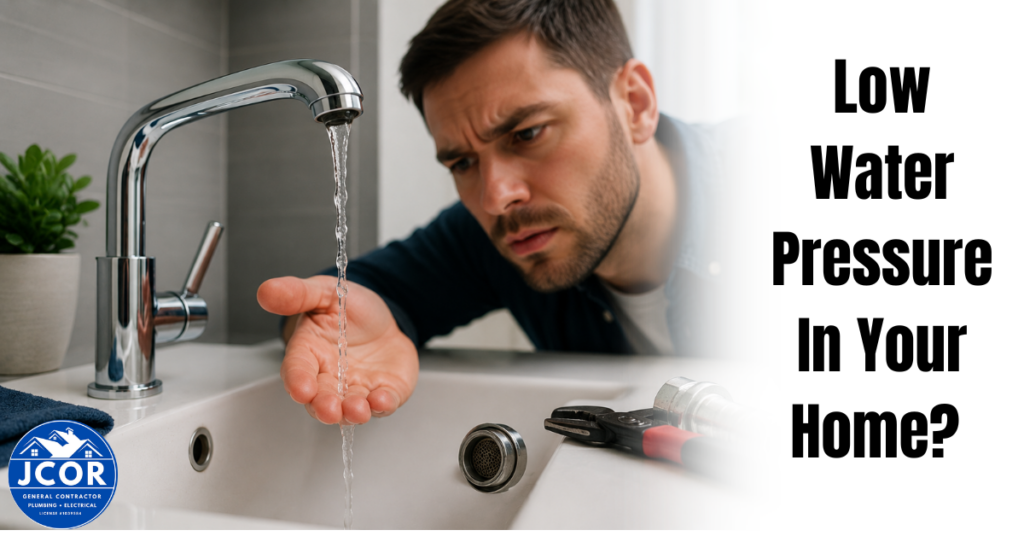
Few things are more frustrating than turning on a faucet and getting only a weak stream of water. Whether you’re trying to take a shower, wash dishes, or run multiple fixtures at the same time, low water pressure can quickly become a daily annoyance.
At JCor Plumbing, this is one of the most common issues homeowners call us about. Sometimes the fix is surprisingly simple. Other times, low pressure can be an early warning sign that your home needs professional leak detection before a small problem turns into a costly repair.
If you’ve been searching for answers about low water pressure in your house, this guide will walk you through the most common causes, a few troubleshooting steps you can try yourself, and when it’s time to call for professional plumbing services.
Table of Contents
What Is Considered Low Water Pressure?
Most homes perform best when water pressure stays between 40 and 60 PSI. When pressure drops below that range, you’ll usually notice weaker flow from faucets, showers, and appliances.
The location of the problem often provides clues. If only one fixture is affected, the issue may be minor. If pressure is low throughout the home, there could be a larger plumbing problem that needs attention. In some cases, our team has discovered aging pipes that eventually required sewer line repair to restore proper system performance.
Signs You Have Low Water Pressure
Many homeowners don’t realize they have a pressure problem until everyday tasks start taking longer than usual.
Some of the most common warning signs include:
- Weak water flow from faucets
- Poor shower performance
- Slow-filling bathtubs
- Washing machines taking longer to fill
- Pressure drops when multiple fixtures are running
- Weak outdoor hose performance
We’ve also seen situations where homeowners experienced pressure problems along with recurring drainage issues. When that happens, professional drain cleaning may be needed to remove buildup affecting overall plumbing performance.
4 Common Causes of Low Water Pressure
When homeowners contact our team about low water pressure, the cause usually falls into one of several common categories. Some problems have simple DIY solutions, while others require professional equipment to diagnose accurately.
Over the years, we’ve helped homeowners with everything from clogged fixtures to severe pipe blockages that required hydro jetting to restore proper water flow. The key is identifying the source of the problem before it gets worse.
1. Clogged Faucet Aerators and Fixtures
One of the simplest and most common causes of low water pressure is mineral buildup inside faucet aerators and showerheads.
As water moves through your plumbing system, small amounts of sediment and minerals can collect inside fixtures. Over time, that buildup restricts water flow and creates noticeable pressure problems.
Signs This Is the Problem
You may be dealing with a clogged fixture if:
- Only one faucet has low pressure
- Water flow has gradually decreased
- Mineral deposits are visible around the fixture
- Other fixtures throughout the house work normally
DIY Fix
This is usually one of the first things we recommend homeowners check.
Remove the aerator and inspect it for debris or mineral buildup. Soaking it in white vinegar for several hours can often restore normal flow.
If you’re also dealing with slow drains elsewhere in the home, addressing those issues at the same time can help improve overall plumbing performance.
When to Call a Plumber
If cleaning the fixture doesn’t improve water flow, the restriction may be deeper inside the plumbing system.
Our team can inspect the affected lines and determine whether additional cleaning or repairs are needed before the problem spreads to other fixtures.
2. Hidden Plumbing Leaks
If multiple fixtures are experiencing low pressure, one of the next things we look for is a hidden leak.
When water escapes from a damaged pipe before reaching your fixtures, pressure throughout the system can drop significantly. Because many leaks occur behind walls, under floors, or beneath concrete slabs, homeowners often don’t realize a leak exists until additional symptoms appear.
Signs This Is the Problem
Common warning signs include:
- Higher-than-normal water bills
- Damp spots on floors or walls
- Mold or mildew growth
- Water stains on ceilings
- The sound of running water when no fixtures are being used
DIY Fix
Start by checking visible plumbing connections under sinks, behind toilets, and near appliances.
You can also perform a water meter test by shutting off all fixtures and monitoring whether the meter continues moving.
While these steps may help identify obvious leaks, most hidden leaks require professional leak detection equipment to locate accurately.
When to Call a Plumber
If you suspect a leak but can’t find the source, it’s best to schedule an inspection before additional damage occurs.
At JCor Plumbing, we use specialized equipment to locate hidden leaks with minimal disruption to your home. If the problem is found beneath the foundation, professional slab leak repair may be necessary to restore water pressure and prevent structural damage.
3. Corroded or Aging Pipes
If your home is older, the problem may not be a fixture or a leak at all. It could be the pipes themselves.
Over time, older plumbing materials can corrode from the inside. As corrosion builds up, the opening inside the pipe becomes smaller, restricting water flow and reducing pressure throughout the home.
We’ve seen this issue in many older homes where homeowners thought they had a water pressure problem when the real issue was years of buildup inside aging pipes.
Signs This Is the Problem
You may have corroded pipes if:
- Water pressure has slowly decreased over the years
- Multiple fixtures are affected
- Water appears rusty or discolored
- Your home still has older plumbing materials
- The pressure problem affects the entire house
DIY Fix
Unfortunately, there isn’t a reliable DIY solution for internal pipe corrosion.
You can inspect exposed pipes for signs of rust or deterioration, but most corrosion happens inside the pipe where it cannot be seen.
The best thing you can do is identify the issue early before it leads to larger plumbing failures.
When to Call a Plumber
If aging pipes are restricting water flow, repairs or pipe replacement may be necessary.
In some homes, deteriorating pipes are discovered during inspections for trenchless sewer repair projects or other major plumbing upgrades. A professional inspection can determine whether the existing plumbing system is still in good condition or nearing the end of its lifespan.
4. Municipal Water Supply Problems
Before assuming the problem is inside your home, it’s worth considering whether the local water supply could be the cause.
Occasionally, water pressure drops because of utility maintenance, damaged water mains, neighborhood demand spikes, or other municipal issues.
These situations often affect multiple homes in the same area.
Signs This Is the Problem
You may be dealing with a municipal supply issue if:
- The pressure loss happened suddenly
- Neighbors are experiencing similar problems
- Every fixture is affected equally
- Utility work is happening nearby
- Pressure returns at different times of the day
DIY Fix
Start by contacting your local water provider.
They can tell you whether maintenance or repairs are affecting service in your neighborhood.
You should also verify that your home’s main water shut-off valve is fully open.
Beyond those basic checks, there usually isn’t much homeowners can do until the utility issue is resolved.
When to Call a Plumber
If the water provider confirms there are no known issues, the problem may be somewhere within your home’s plumbing system.
In situations where pressure drops suddenly and is accompanied by active leaks or pipe failures, calling an emergency plumber can help prevent further damage and restore water service as quickly as possible.
When Should You Call JCor Plumbing for Low Water Pressure?
Not every water pressure issue requires professional help right away, but there are times when it’s better to have an experienced plumber take a closer look before the problem gets worse.
At JCor Plumbing, we often hear from homeowners who tried a few DIY fixes but still couldn’t figure out why their water pressure wasn’t improving. In many cases, what seemed like a minor inconvenience turned out to be a hidden leak, aging pipes, or another plumbing issue that needed professional attention.
We recommend calling JCor Plumbing if:
- Low water pressure affects multiple fixtures throughout your home
- Cleaning fixtures and trying basic DIY fixes hasn’t solved the problem
- You suspect a hidden leak somewhere in the plumbing system
- Your water bill has increased without explanation
- Pipes appear damaged, corroded, or outdated
- Water pressure continues getting worse over time
- You notice additional warning signs such as damp walls, mold growth, or unusual plumbing noises
Our team has the tools and experience to identify the root cause of the problem and recommend the most effective solution. Whether it’s a simple repair or a more complex plumbing issue, addressing it early can help you avoid larger and more expensive repairs down the road.
Other Plumbing Issues That Can Affect Water Pressure
Low water pressure isn’t always an isolated problem.
At JCor Plumbing, we’ve found that weak water flow is often connected to other plumbing issues that homeowners may not notice right away. During inspections, we regularly uncover related problems that can affect the overall performance of a home’s plumbing system.
Some of the most common issues include:
- Water heater repair needs caused by sediment buildup inside the tank, which can restrict hot water flow and reduce pressure.
- Heavy buildup inside pipes that may require hydro jetting to remove stubborn debris and restore proper water flow throughout the system.
- Aging or damaged utility connections that require gas line repair to maintain the safety and reliability of your home’s infrastructure.
- Hidden leaks that may not be visible but can reduce water pressure and increase monthly water bills.
- Pipe corrosion that restricts water flow and gradually affects multiple fixtures throughout the home.
Addressing these problems early can help prevent larger repairs, improve plumbing performance, and keep your home’s system operating efficiently.
Low Water Pressure During Remodeling Projects
Home renovation projects often uncover plumbing issues that have been hidden for years.
We’ve worked with many homeowners who discovered aging pipes, leaks, or water flow restrictions while planning a kitchen remodel or updating outdated fixtures during a bathroom remodel.
These projects provide a great opportunity to evaluate the condition of your plumbing system before walls and finishes are installed.
For larger renovation projects, homeowners often work with a general contractor to coordinate plumbing improvements alongside other upgrades. If the project includes expanding the home’s footprint, a room addition contractor may also recommend plumbing upgrades to ensure adequate water pressure throughout the new space.
Many homeowners choose to modernize multiple systems at once. In those situations, plumbing work is often coordinated with electrical services to improve the overall functionality and efficiency of the home.
While this article focuses primarily on homeowners, low water pressure can also affect commercial properties. A qualified commercial plumber can help diagnose and resolve similar issues in offices, retail spaces, and other business environments.
Frequently Asked Questions
Why Is the Water Pressure Low in My House?
Low water pressure can be caused by clogged fixtures, hidden leaks, aging pipes, municipal water supply issues, or plumbing restrictions. If you’re unsure of the cause, professional plumbing services can help identify the problem.
Why Do I Suddenly Have Low Water Pressure?
A sudden pressure drop is often caused by a leak, a water supply issue, or a damaged pipe. In some situations, homeowners may need professional leak detection to locate the source of the problem.
Can a Water Leak Cause Low Water Pressure?
Yes. When water escapes from a damaged pipe before reaching your fixtures, pressure throughout the home can decrease. In some cases, professional slab leak repair may be necessary if the leak is located beneath the foundation.
Can Pipe Corrosion Reduce Water Pressure?
Absolutely. Corrosion narrows the inside of pipes and restricts water flow. In severe cases, homeowners may eventually need sewer line repair or other pipe replacement solutions.
Why Is Only One Faucet Experiencing Low Pressure?
A clogged aerator or fixture is usually the cause. If cleaning doesn’t help, professional drain cleaning or a plumbing inspection may be needed to identify the restriction.
What Is the Best Solution for Severe Pipe Buildup?
The answer depends on the condition of the pipes. For many homes, hydro jetting is one of the most effective methods for removing heavy buildup and restoring flow.
Can Low Water Pressure Be an Emergency?
Sometimes. If pressure loss is accompanied by active leaks, flooding, or pipe failures, contacting an emergency plumber immediately can help minimize property damage.
Can Remodeling Improve Water Pressure?
Yes. During a bathroom remodel or other renovation project, outdated plumbing components can often be upgraded to improve overall water flow and system performance.
Final Thoughts
Low water pressure is one of those problems that homeowners often ignore at first, hoping it will resolve on its own. Unfortunately, that’s not usually the case.
While some issues are as simple as cleaning a clogged fixture, others involve hidden leaks, aging pipes, or larger plumbing system problems that require professional attention.
At JCor Plumbing, we’ve helped countless homeowners identify the source of low water pressure and restore reliable water flow throughout their homes. Whether the solution involves repairs, upgrades, inspections, or preventative maintenance, addressing the problem early is always the best approach.
If you’re dealing with low water pressure and aren’t sure what’s causing it, our team is here to help. Contact JCor Plumbing today to schedule an inspection and get your plumbing system back to performing the way it should.